
Industrial Excellence. Engineered for Ghana.
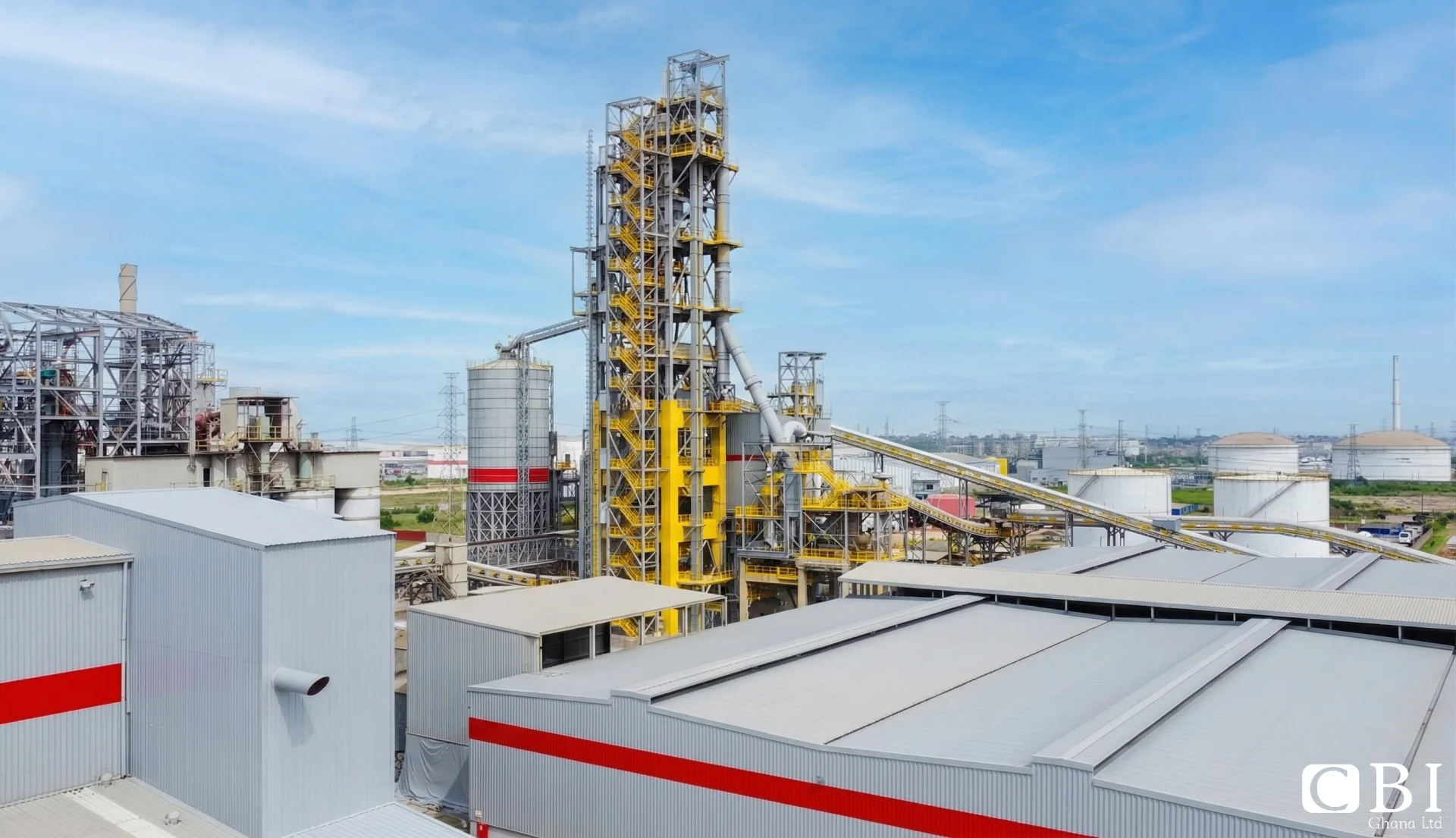
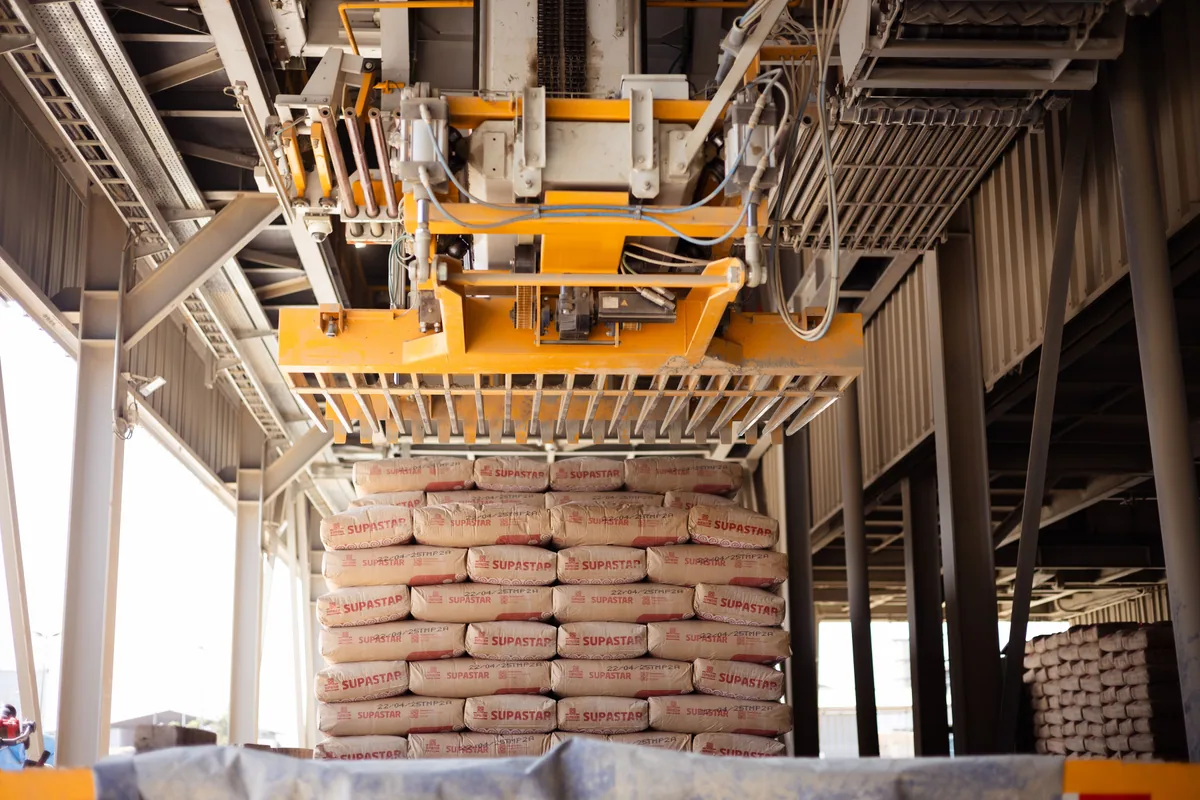
Located in Tema, the CBI Ghana plant is a world-class manufacturing facility designed for precision, sustainability, and absolute supply-chain reliability. We transform raw materials into the high-performance cement that anchors national development.
Leading the Region's Decarbonization Roadmap.
Our facility is home to West Africa's first industrial-scale Limestone Calcined Clay Cement (LC3) production line. By utilizing advanced calcination technology, we produce a specialized clay that significantly reduces clinker dependency.
For our institutional partners, this facility is more than an innovation — it is a compliance guarantee.
Meeting the rigorous ESG and carbon-intensity benchmarks of international development banks.
Delivering cement with superior early strength and durability for harsh environments.
Aligning your project with the 2026–2028 global shift toward sustainable procurement.
Stability Through Local Sourcing.
A critical risk in the construction sector is supply chain volatility. CBI Ghana has engineered its operations to provide a defensive shield against global market fluctuations.
Insulating our partners from the currency risks associated with imported clinker.
Ensuring consistent production volumes to keep major infrastructure projects on their critical path.
Contributing to Ghana's industrial autonomy by maximizing local value addition.
Eliminating the Fear of Failure.
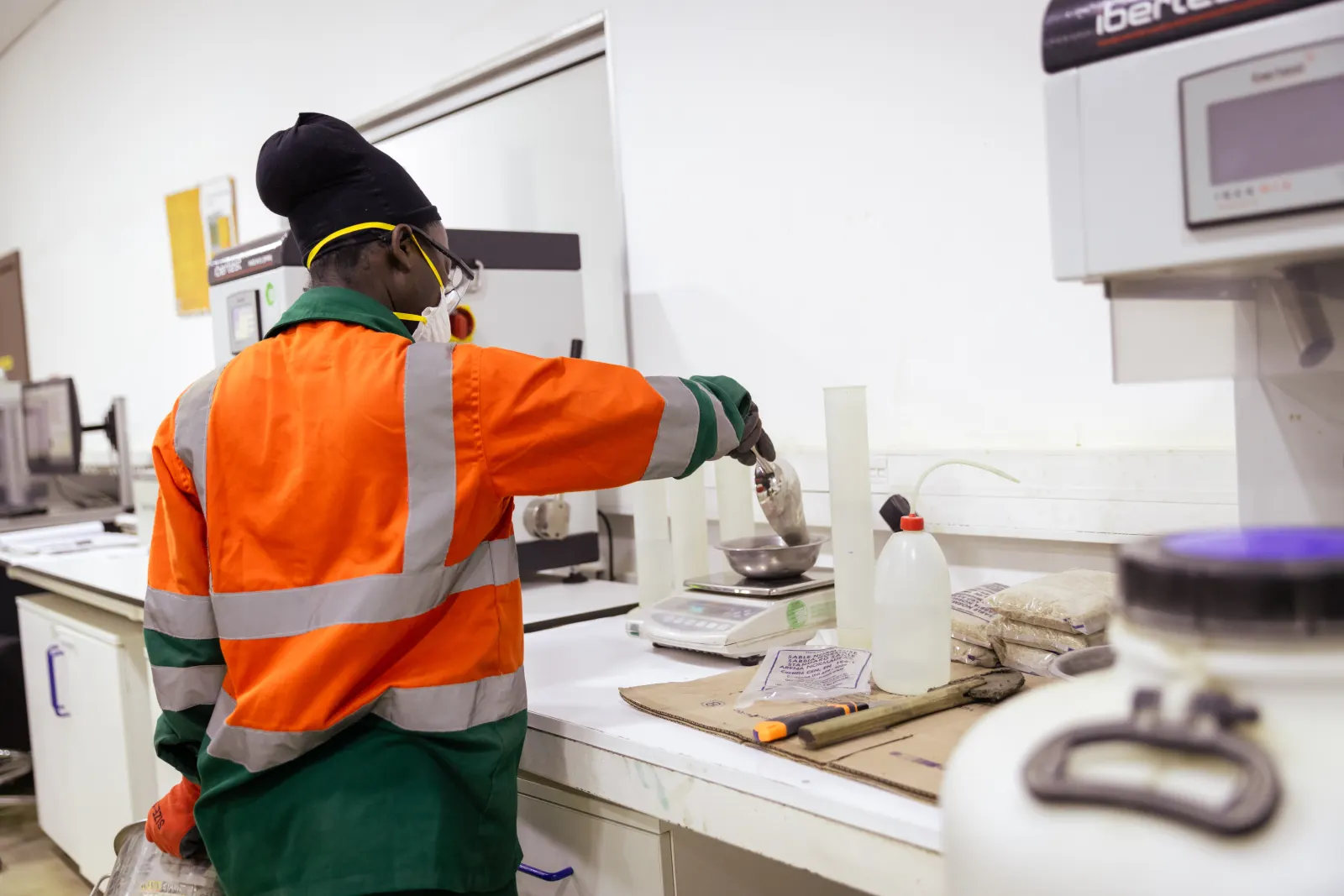
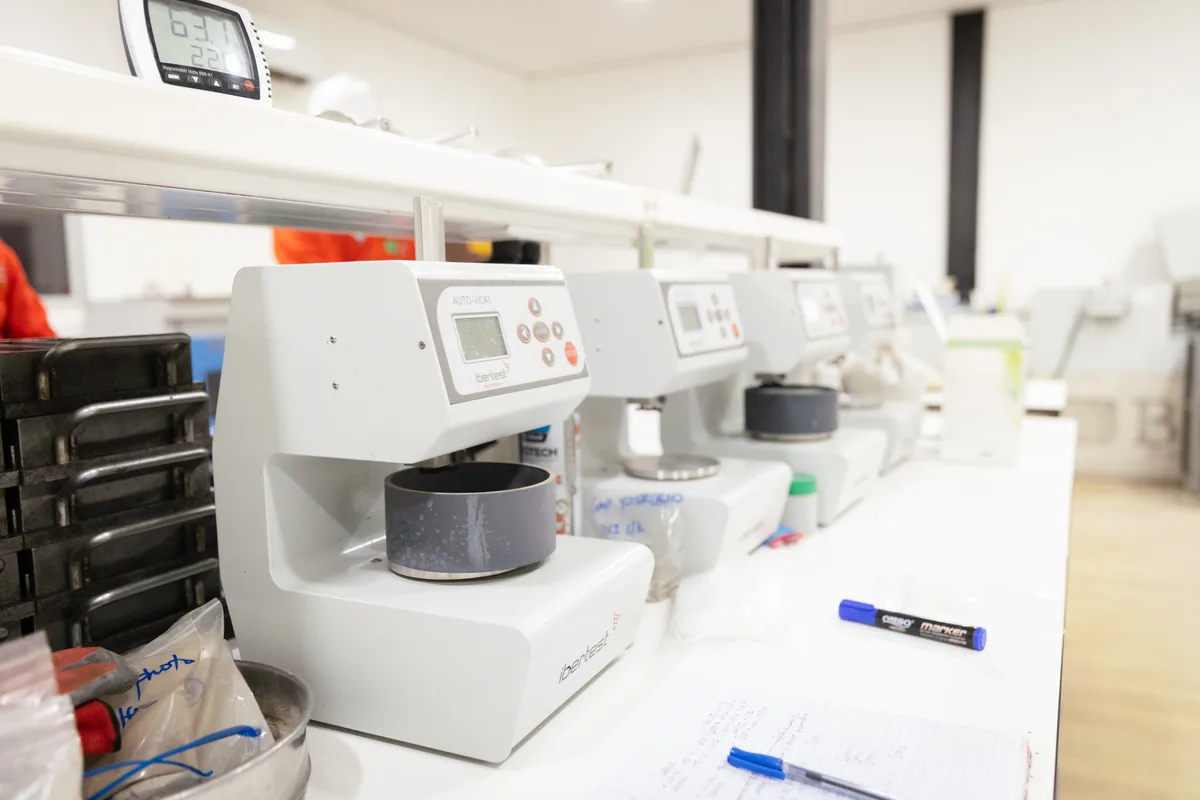
At the heart of our plant is our state-of-the-art R&D and Quality Control Laboratory. Here, our scientists and engineers ensure that every metric ton of cement meets the "Procedural Standard" expected by high-value project stakeholders.
Audit-Ready QA
Continuous automated monitoring exceeding international standards.
Custom Mix Designs
Technical support for engineers to optimize performance for specific site conditions.
Data Transparency
Technical dossiers and performance reports ready for institutional pre-qualification.
Real-Time Monitoring
Predictive quality modelling across every production batch.
A Non-Negotiable Commitment to Safety.
Aligned with our LEADS core values, our Tema plant operates under a strict, zero-harm industrial mandate. We maintain the highest standards of safety for our people and the environment — ensuring that our facility remains a stable and reliable link in your project's supply chain.
1.5M+
Tonnes Annual Cement Capacity
400,000
Tonnes Annual LC3 Capacity
2024
Year LC3 Facility Commissioned
The Tema Free Zones Facility
Our state-of-the-art facility located in the Tema Free Zones Enclave represents a monumental shift in West African industrial capability. We have invested heavily in cutting-edge kiln technology specifically designed to process locally sourced clay into low-carbon calcined clay (LC3), reducing CO2 emissions by up to 40% compared to traditional Ordinary Portland Cement.
Tangible Emissions Reductions
295 ktCO2e/yr
Project Emissions Reductions
Our facility fundamentally alters the emissions profile of cement production in Ghana, delivering an annual reduction of 295 ktCO2e based on a baseline production of 2,286 kt of cement, excluding maritime offsets.
382 ktCO2e/yr
Total Reductions (Including Maritime)
When factoring in the offset of maritime import emissions (87 ktCO2e/yr), our total systemic impact scales up to a massive 382 ktCO2e reduction in carbon footprint each year.
Our Challenge: Convincing The Regulator
To sanction LC3—a revolutionary seventh type of cement—in Ghana, we had to systematically rewrite the rules of building materials by building unassailable institutional consensus.
Build and leverage networks in research and academia
Locally and internationally, we anchored our push on rigorous academic validation.
Bring policy and research institutions along on the journey
Ensured total transparency and collaboration with governmental standard-setting bodies.
Form partnerships with other manufacturers
Securing powerful industry allies to collectively work with regulators and shape the future of cement.